Table of contents
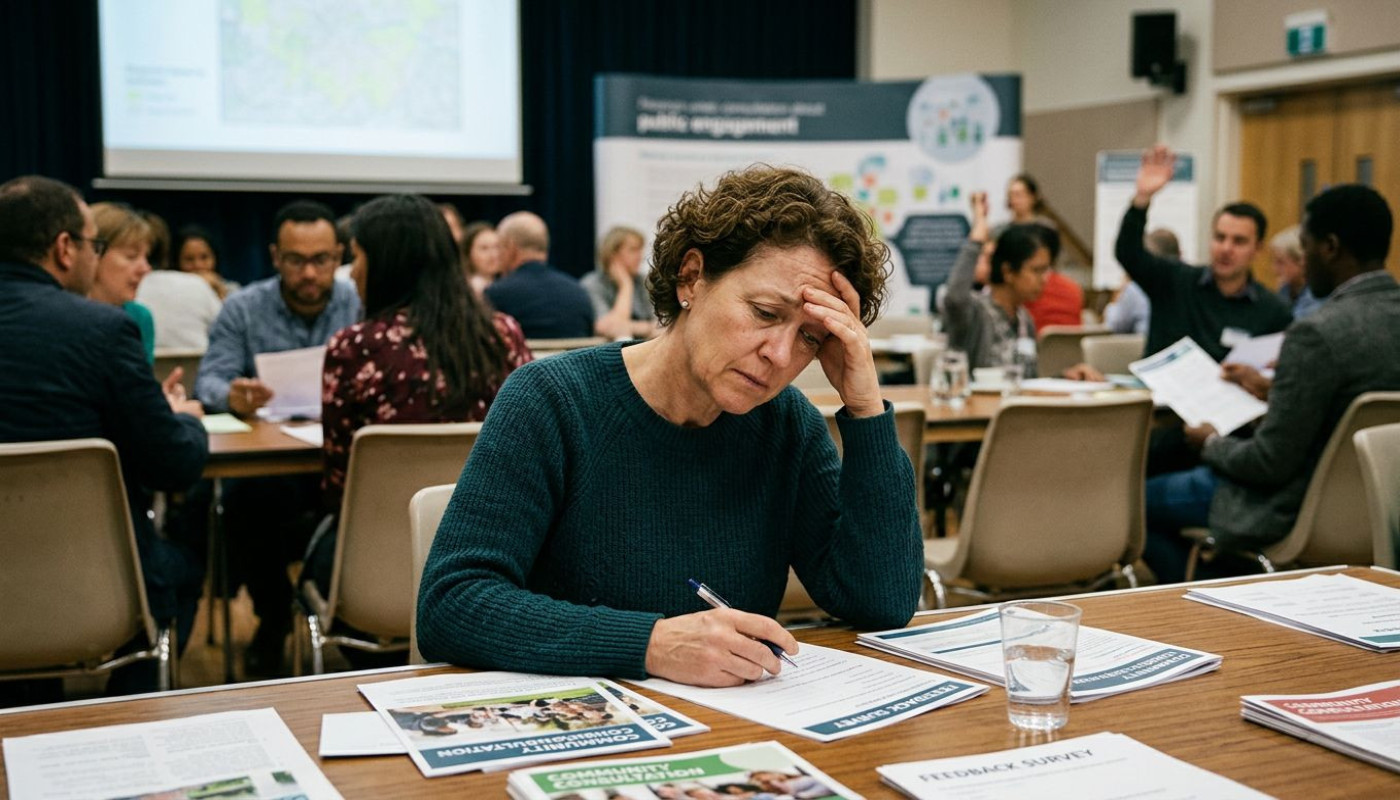
Another survey, another consultation, another plea for “your input”. Across democracies, citizens are being asked to weigh in on everything from workplace wellbeing to national identity, and yet turnout keeps sagging, trust keeps sliding, and the same people tend to answer every time. In 2024 and 2025, major polls across North America and Europe continued to show a stubborn pattern: fatigue with politics is rising, and so is the feeling that consultations rarely change outcomes. So, are citizens simply tired of being asked?
Too many surveys, too little impact
“Have your say” has become a governing reflex, and not only in politics. Employers run quarterly pulse checks, municipalities launch digital questionnaires, and governments commission deliberative panels, citizens’ assemblies, and public comment periods, often in parallel. The quantity is not in doubt; the problem is what happens next. In a 2024 Pew Research Center survey of U.S. adults, 72% said they trusted the federal government to do what is right only “some of the time” or “never”, a figure that has hovered near historic lows for years, and it matters because people who expect follow-through are more likely to participate.
The fatigue shows up in electoral and civic numbers. Turnout for the 2024 European Parliament elections rose overall, yet remained uneven, with several countries still wrestling with chronic abstention and disengagement. In the United States, participation spikes in presidential years, then drops sharply in midterms and local elections, and the same dynamic carries into consultations: those with time, resources, and strong views disproportionately show up. Researchers call it “participation bias”, and it means consultations can amplify the loudest rather than the broadest, which in turn deepens the perception that the process is performative.
There is also an attention economy angle that officials rarely acknowledge. Citizens are asked to read lengthy policy documents, respond to complex trade-offs, and do so amid algorithm-driven feeds, economic pressures, and mounting daily stress. The World Health Organization has repeatedly highlighted burnout as an occupational phenomenon, and even outside the workplace, the language of exhaustion has seeped into civic life. Consultation burnout is not just a metaphor; it is a collision between infinite requests for engagement and finite cognitive bandwidth.
When consultations do lead to changes, the communication is often inadequate. Institutions publish dense reports, bury responses in annexes, and rarely offer a clear “you said, we did” narrative that credits participants, and explains constraints. Without that feedback loop, each new survey feels like the first step of a journey that never arrives, and people learn, rationally, that replying is not worth the effort.
Who answers, and who opts out
The same question haunts every consultation designer: who is missing? Time-poor workers, single parents, people with precarious housing, migrants wary of exposure, and younger citizens who distrust institutions often do not participate, even when issues affect them directly. That is not speculation; it is a pattern documented in public administration research and confirmed by turnout data. In 2023 and 2024, OECD analyses of trust and governance continued to underline unequal civic participation, warning that when engagement skews toward older and better-educated groups, policy risks drifting away from lived realities.
Digital tools were supposed to fix this, and they have helped in some contexts. Online consultations lower logistical barriers, allow multilingual access, and can reach people who avoid town halls. But digital channels introduce their own distortions: the most online are not always the most representative, and bots, coordinated campaigns, and outrage dynamics can warp the signal. The result is a paradox, consultations appear broader because they are online, yet the underlying sample can remain narrow, and the tone can become harsher. Officials then respond by tightening moderation, which can fuel accusations of censorship, and the cycle continues.
Another driver is social trust, which has been under strain across many countries. The 2024 Edelman Trust Barometer reported that trust in government remained fragile in numerous markets, and that perceived unfairness, misinformation, and institutional opacity were pushing people into defensive attitudes. When citizens believe the system serves insiders, a consultation invitation can read like a corporate satisfaction survey after a bad experience: an attempt to manage perception rather than fix the problem.
And then there is the personal calculus. Participation takes time, and time has a cost. In high-inflation periods, or in economies where housing and energy bills bite, civic engagement competes with survival tasks. If consultations are not designed with compensation, childcare, accessible hours, and truly understandable materials, they effectively ask citizens to subsidize governance with unpaid labor, and it is unsurprising that many decline.
When “consultation” becomes a political shield
Consultations can be democratic tools, but they can also be political shields. Leaders sometimes launch them to delay decisions, defuse anger, or legitimize choices already made. Citizens notice. In the UK, for example, the National Audit Office and parliamentary committees have repeatedly criticized elements of public consultation practice over the years, pointing to cases where timelines were tight, evidence was thin, or stakeholder input was unevenly weighed, and while each case differs, the cumulative effect is cynicism about the process.
This is where consultation burnout becomes corrosive. If people suspect that the exercise is designed to create a veneer of consent, they either disengage, or they engage in bad faith, treating the consultation as a battlefield rather than a forum. That dynamic is intensified by polarised media environments, where each side frames a consultation as either a stitch-up or a hijack attempt. The public sphere then shifts from persuasion to mobilisation, and consultation becomes another front in a perpetual campaign.
There is also a strategic communication temptation: to ask the public questions that are easy to ask, rather than the questions that matter. People can be consulted on slogans, branding, or “priorities”, while the actual levers of policy, budgets, timelines, enforcement, are left untouched. The result is a mismatch between what is being offered and what citizens want: influence over outcomes. In democracies, legitimacy is not built by asking more often; it is built by sharing power in ways that are visible and measurable.
Sometimes, the consultation itself is framed too broadly, which makes participation feel pointless. “How should we improve healthcare?” is not a question; it is a universe. When citizens cannot see the decision boundary, they cannot tailor their input, and they assume it will vanish into a report. Narrower questions, clearer trade-offs, and transparent constraints do not reduce democracy; they make it intelligible, and therefore more credible.
Rebuilding trust starts with fewer questions
Less can be more, and in civic participation, it often is. The most promising reforms are not flashy platforms; they are disciplined commitments. Publish a short, readable brief, set out what is genuinely undecided, and promise a public response with dates and responsibilities. If a ministry or city cannot commit to acting on the results, it should not run the consultation at all, because it trains citizens to ignore future invitations. That is not anti-democratic; it is respect for attention.
Well-designed deliberation can also help, especially when it is representative and resourced. Citizens’ assemblies, when properly sampled and supported, can move beyond the loudest voices and create space for learning, compromise, and nuanced recommendations. Ireland’s assemblies on constitutional issues are often cited as a benchmark, not because they were perfect, but because they were structured, transparent, and linked to clear political processes. The lesson is straightforward: participation works when it is connected to power, and when participants can see the chain between their work and public decisions.
Finally, governments should treat consultation like any other high-stakes system: measure it. Track who participated, who did not, and why; publish demographic summaries; test whether changes followed, and report outcomes in plain language. Citizens have become sophisticated consumers of information, they compare claims, they detect vagueness, and they increasingly seek practical pathways, including personal options that sit outside domestic politics. That curiosity extends even to mobility and second citizenship questions, where people scrutinize costs and requirements, and frequently start with basic benchmarks such as Vanuatu Passport Price before deciding whether deeper research is worthwhile.
Consultation burnout is not inevitable. It is, in many cases, a management problem: too many asks, too little clarity, and too little accountability. Fix those, and citizens may not love being consulted, but they will believe it matters, and that belief is the real fuel of participation.
What to do before you click “submit”
Before responding to the next consultation, citizens can protect their time and increase their impact with a few simple checks. Is the question specific, does it state what will be decided, and is there a deadline for an official response to submissions? If those details are missing, treat the process cautiously. Look for evidence of past follow-through, because institutions that publish “you said, we did” updates tend to be more serious about input, and they are also easier to hold accountable.
For organisers, the practical fixes are equally concrete. Budget for outreach and accessibility, not just a web form, and invest in feedback loops that report outcomes in plain English. Pay participants in time-intensive deliberations, provide childcare where needed, and design materials that assume no prior expertise. Above all, run fewer consultations, and make each one count; citizens do not need more invitations, they need proof that their voice changes something.
Planning your next step
If you are weighing whether to take part, start by estimating the time cost, then decide where your input can realistically shift an outcome, and if the process is opaque, consider joining a local group that can amplify evidence-based submissions. For major life decisions, set a budget for expert advice, and check whether any public funding or legal aid applies in your jurisdiction; informed choices, civic or personal, usually begin with clear numbers and a documented pathway.
On the same subject

Exploring The Art Scene Near Popular Hotels In Paris

How to make an advent calendar?

What are the steps to create an OnlyFans management agency and generate income ?

How to get a sexcam experience with camgirls?

What are the best online casinos in France?

Anxiety rings for better stress management

What are the advantages of opting for SMS ?
Why should you choose a blonde girl for sex?

Who is Adrian Cheng?

What to know about the Tongue drum?

Travel by expensive : how to go about it ?

Which laptop to choose for trading?

How to ensure the longevity of a laptop battery?

Graphic tablets: advantages and disadvantages

Creating a chatbot easily: Three best tools you can use ?

What is the role of an advertising agency?

Why vary your strength training sessions?

Best free online status spell checkers

What diet should you adopt for your bodybuilding exercise?

Home automation: what are the advantages of this technology?

What is the ideal protein for muscle building?

How to create a poster to find a lost cat?

Some methods to find out the estimated payment for a house

How to find your pet ?

What is the importance of a home automation sensor?

How to have a good breakfast?

How to determine the size of a deck

How do I pay the visitax?

What can we know about AstraZeneca's current actions?

Stop DDoS attacks: the support you need

Our tips for painting a wooden window

What to understand about web development ?

Fitness ball: how to choose ?

Tips for a well-designed living room
